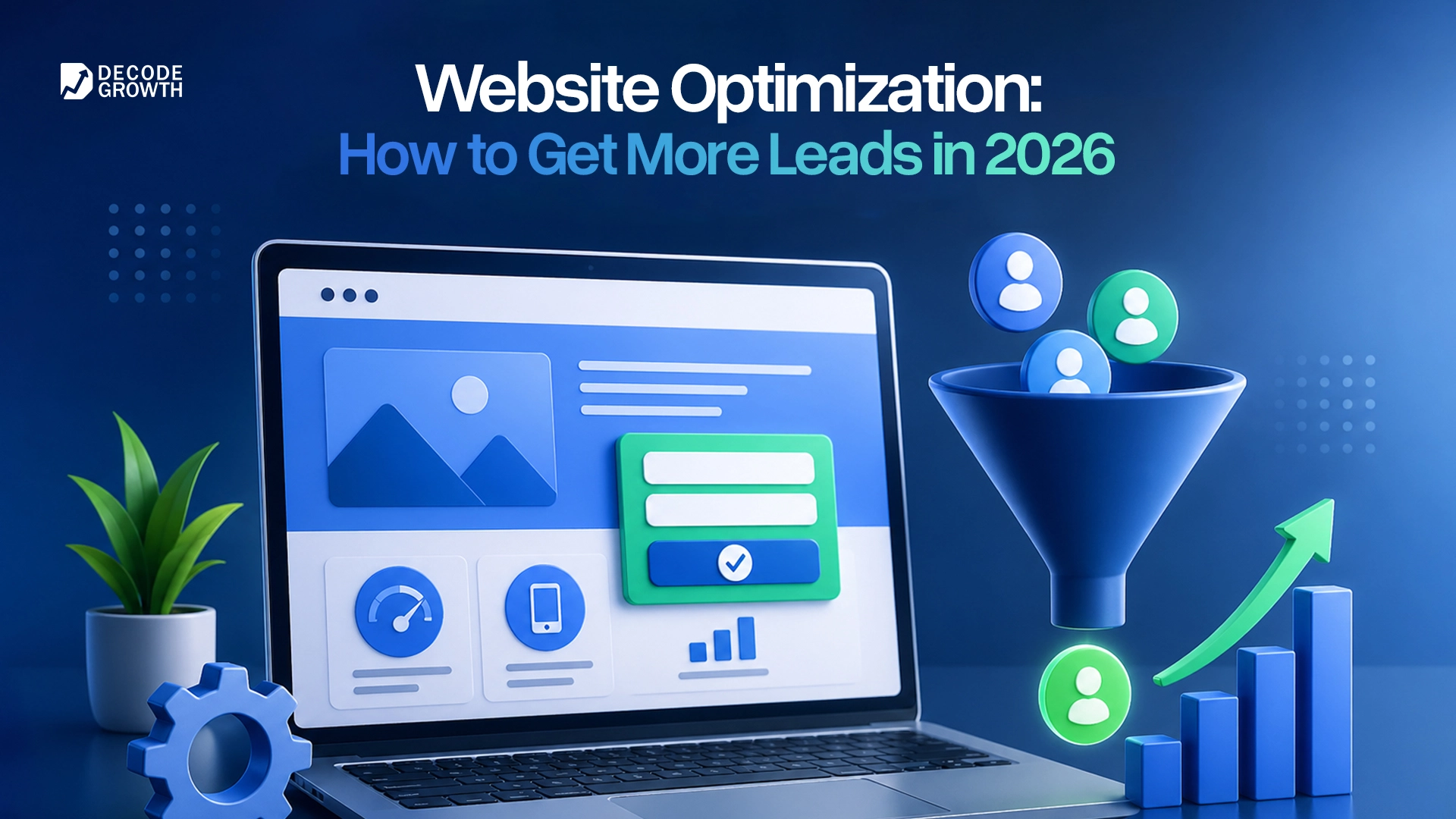
Your website is getting traffic. People are landing on your pages, scrolling around a bit, then leaving. No inquiry. No form fill. No sale. And you’re sitting there wondering what’s going wrong.
Nine times out of ten, it’s not your product. It’s not even your pricing. It’s the website itself, or more accurately, what the website fails to do once someone lands on it.
Here’s the thing most businesses miss: a website that just describes what you do is not a lead generation tool. It’s a brochure. And in 2026, a brochure-style website is quietly bleeding you of business every single day, handing it straight to whoever figured this stuff out before you did.
Let’s talk about what actually works.
Your Website Needs to Do More Heavy Lifting
Over 90% of marketers say their website is their primary channel for generating leads and sales. Think about that for a second. Not paid ads. Not cold outreach. The website. If yours isn’t pulling that weight, you’re not just leaving money on the table, you’re actively funding your competitors.
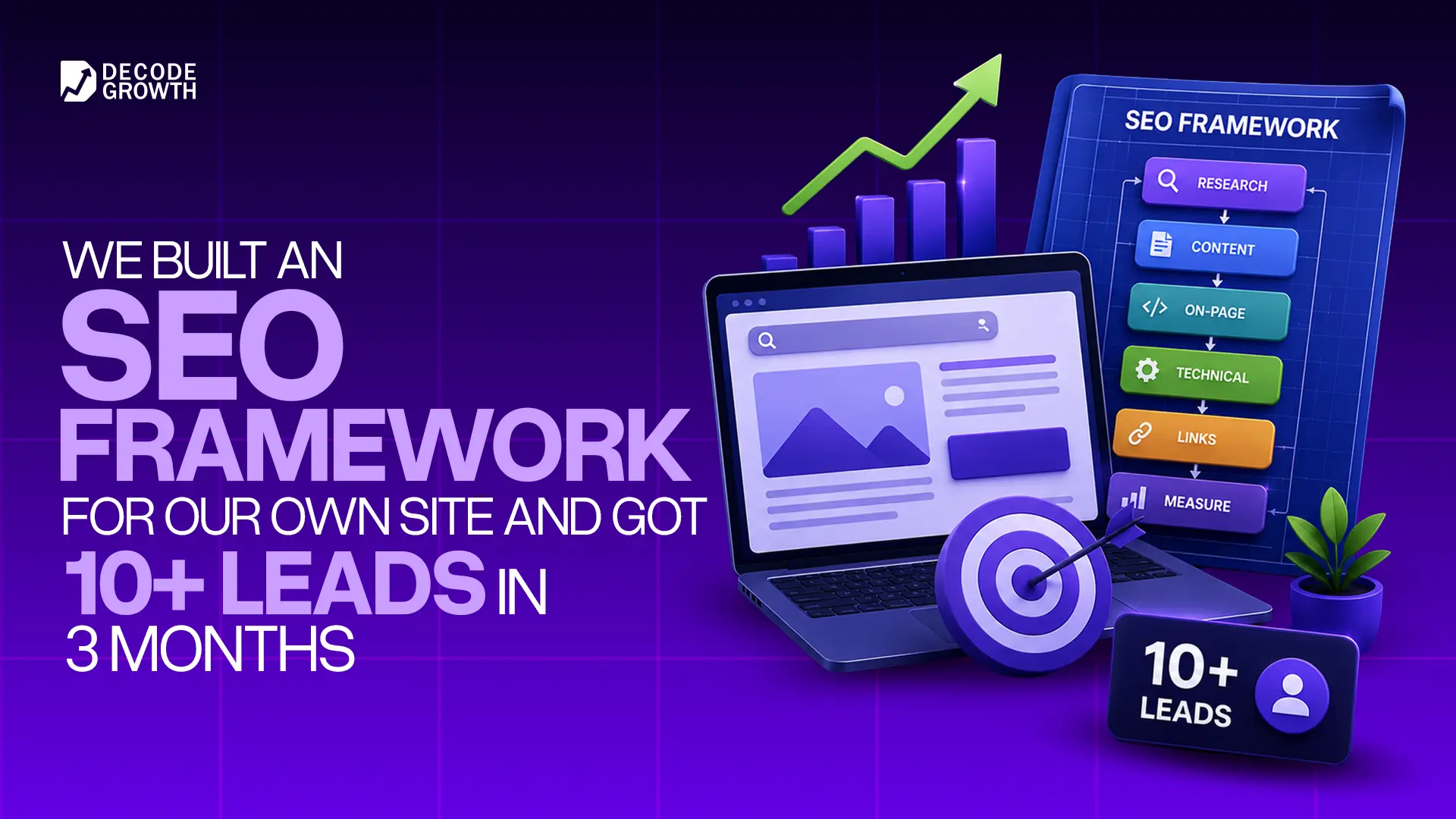
SEO is still the single highest-return marketing investment most businesses can make. Organic search drives more than half of all website traffic, and B2B companies pull twice as much revenue from organic search as from any other channel. Twice. Not 10% more. Double.
But here’s where most businesses get this wrong: they think SEO is about cramming keywords into pages. It’s not. Not anymore. What Google actually rewards in 2026 is content that genuinely answers the questions your buyers are typing in. Write something that helps people understand their problem, earns a few links from credible sources, loads fast, and works on mobile. That’s the core of it. The top three organic results collect more than half of all clicks on any search page. If you’re not there, most searchers will never know you exist.
Page speed matters more than most people realise. Every extra second your site takes to load, you’re losing a percentage of visitors who won’t stick around. Compress your images. Get a decent hosting provider. Fix your Core Web Vitals score. Google uses these as ranking signals, and real humans use them to decide within about three seconds whether they trust you enough to keep reading.
Mobile is not a secondary concern anymore. Close to 62% of online users browse on their phones. If your site is awkward on a phone, if the buttons are tiny and the forms are annoying to fill out, your bounce rate goes up, your rankings go down, and your leads dry up. Simple as that.
Content That Actually Brings People In
Content marketing generates three times more leads than traditional outbound while costing 62% less. Those numbers sound made up, but they’re not. The catch is that most businesses do content marketing badly. They publish blog posts nobody asked for, on topics nobody searched for, and then wonder why it’s not working.
The shift that changes everything is this: stop writing content because you think you should, and start writing content that solves the specific problems your buyers are actively searching for.
B2B buyers read blog posts. A lot of them. Research consistently shows that 72% of B2B buyers say blog content is the most valuable format they consume in the early stages of figuring out what they need. Before they’re ready to talk to anyone, they’re reading. If your content shows up when they’re doing that reading, and if it actually helps them think through their problem, you become the obvious choice by the time they’re ready to buy.
Long-tail keywords are your friend here. Not “digital marketing” but “how to generate leads from a website without paid ads.” Not “SEO services” but “why my website gets traffic but no enquiries.” Specific search intent, written by someone who already has the problem. That’s what closes the gap between a visitor and a lead.
Video is no longer optional either. 93% of marketers say it delivers strong ROI, and the majority of B2B companies are increasing their video budgets this year. You don’t need a production team. A clear, straightforward explainer video shot on decent equipment is enough to build trust in a way that paragraphs of text rarely manage. Put them on YouTube. Embed them on your service pages. Short clips on LinkedIn. Video does something text can’t: it lets people hear how you think, which is often the thing that tips someone from curious to ready to buy.
Lead magnets still work, provided they’re genuinely useful. A checklist, a free audit, a practical template, a focused short guide on something your buyers actually care about. Not a recycled version of your existing blog posts dressed up as a download. If someone grabs it and immediately gets value, they’ll remember who gave it to them. That matters when they’re ready to pick up the phone.
Multiple Channels Working Together
Your website is the centre of it all, but it’s not the only place you need to show up. The businesses consistently generating the most leads right now are combining channels, not betting everything on one.
Email gets dismissed constantly, and it keeps proving people wrong. It’s the top converting channel in B2B, full stop. The reason is simple enough: the people on your list already raised their hands. They gave you permission to contact them. That’s a fundamentally different relationship than someone who stumbled across a social post. Build your list through your website using lead magnets and newsletter sign-ups, segment it based on where people are in their journey, and write emails that feel like they came from a person rather than a content calendar. Done well, a good email sequence can turn a cold lead into a paying customer without a single sales call.
LinkedIn social selling is different from just posting content and hoping something lands. It’s the deliberate practice of building real relationships with potential buyers before any commercial conversation starts. Commenting on posts in a way that adds something. Sharing ideas that show you understand the space. Reaching out with personalised messages that reference something specific rather than “I’d love to connect.” Research suggests 66% of marketers generate leads by spending six hours a week on social media. Less than an hour a day. That’s a manageable commitment if the time is spent actually building something rather than broadcasting into the void.
B2B influencer marketing gets overlooked because people think it belongs to lifestyle brands and consumer products. It doesn’t anymore. Partnering with a podcast host, a respected newsletter writer, or a LinkedIn creator whose audience matches your target buyers can put you in front of people who already trust that person’s judgment. The key difference from B2C influencer work is that credibility matters far more than follower count. A niche creator with 10,000 genuinely engaged followers in your specific industry will run circles around a generic business influencer with 500,000 followers who have no particular interest in what you sell.
What’s Actually Working in B2B Right Now
B2B lead generation has its own pace. Decisions take longer, more people are involved, and trust is slower to build than in consumer markets. These are the tactics worth your attention right now.
Personalisation at scale is not about adding someone’s name to an email subject line. Research shows that brands using genuinely personalised experiences were 215% more likely to successfully generate new leads and drive sales growth. That kind of personalisation means showing visitors content relevant to their industry when they land on your site. It means referencing the specific problem someone mentioned in your follow-up message. It means surfacing case studies that match their situation rather than dumping your entire portfolio on them.
Speed of follow-up is something most businesses are terrible at. Responding to a new lead within five minutes makes you nine times more likely to convert them. Nine times. Most businesses take hours, sometimes days. Set up an automated acknowledgement at a minimum. Use live chat to capture intent in real time. Have a clear internal process for who picks up a new lead and when. This alone can dramatically move your conversion numbers without changing anything else.
Referral programmes are chronically underused. 78% of B2B marketers use referrals as a source of leads because referred leads already come with trust built in. They close faster. They tend to be better long-term clients. A structured programme, where you actively encourage happy clients to refer people and actually reward them for doing so, can become one of the most reliable and low-cost lead sources in your whole business. Most companies leave this sitting there untapped.
Building Something That Works Long-Term
Getting leads occasionally is not the goal. Building a system that generates them reliably, month after month, without you having to reinvent your strategy every quarter, that’s the goal.
One thing that kills lead generation efforts faster than almost anything else is the disconnect between sales and marketing. Marketing is celebrating traffic numbers and form fills while sales is complaining the leads are garbage and no one is ready to buy. This is a classic failure mode. Fix it at the root by agreeing on what a qualified lead actually looks like. What signals indicate someone is ready to have a conversation? How quickly will sales commit to following up? How is marketing’s contribution measured against revenue rather than just traffic? Get those answers aligned and a lot of friction disappears.
Measure the things that actually drive revenue. Not page views. Not social media likes. Cost per lead, lead-to-customer conversion rate, revenue generated per channel. Inbound channels like SEO and content marketing consistently outperform outbound on both cost per lead and close rate. That should inform where your budget goes.
One thing worth watching: nearly 30% of marketers have already reported declining organic search traffic as more people shift to AI tools for initial research. That’s not a small signal. It means your content needs to be genuinely authoritative and useful enough to get cited and referenced, not just keyword-optimised. The playbook for 2027 and beyond is being written right now by the businesses paying attention to how buyer behaviour is actually shifting, not the ones still optimising for 2022.
Common Questions
Basically, LinkedIn for real chats before sales talk. Do this: 20 minutes a day commenting smart on your target folks’ posts, drop one useful tip weekly, ping a few custom connection requests to perfect matches. Done. Skip the systems. A few months consistent, and leads roll in.
Big time, right on landing and service spots. A snappy video laying out who you serve and your method builds trust quicker than text for fresh eyes. No need for big budgets. Honest and clear wins every time.
Yep, steady as ever. Tops conversions hands down. Nail it with quality lists over huge ones, slice them by segments, write like a person not a machine. A solid sequence of three to five emails, spaced out right, warms leads to calls without the awkward cold outreach.
More than ever, honestly. Junk like thin, keyword-crammed stuff is dropping off fast, but real helpful content from pros? That’s worth way more now. People keep searching, clicking around. AI digs into top sources too. Turn yourself into one of those, and you’re set for the haul.
Fix your calls to action first. Business websites usually have these lame, vague buttons shoved down at the bottom. Punch them up to be super clear and specific, slap them above the fold on your top traffic pages. Throw in live chat or a chatbot. Get those right, and things start shifting in weeks. SEO and content grind away in the long term, but these easy fixes kick things off strong.