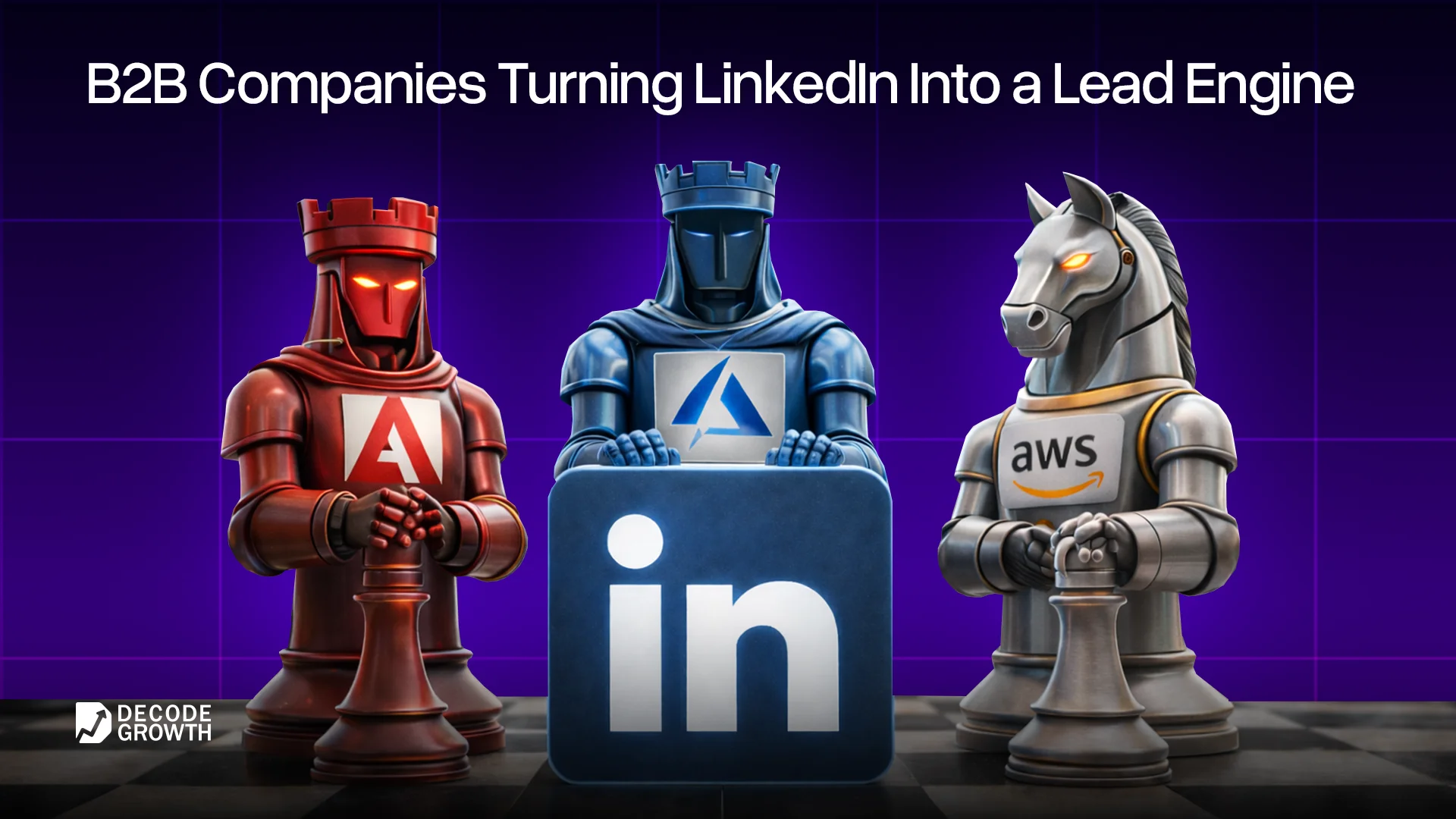
Most B2B companies are on LinkedIn. Very few are actually getting leads from it. They post company updates nobody reads. They run ads that burn the budget with nothing to show for it. They send connection requests that feel copy-pasted, because they are. And then they wonder why LinkedIn “isn’t working.”
Here’s the truth: LinkedIn isn’t broken. The strategy is.
In 2026, LinkedIn will be the single most powerful B2B lead generation platform on the internet. It drives 80% of all B2B leads from social media. Its visitor-to-lead conversion rate is 2.74%, nearly four times higher than Facebook. Four out of five LinkedIn members make business decisions at their organisations. There are 65 million decision-makers and 10 million C-suite executives active on the platform right now.
The opportunity is real. The brands capturing it aren’t the ones with the biggest budgets, they’re the ones who finally stopped treating LinkedIn like a job board and started treating it like the sales engine it actually is. This guide shows you exactly how.
Why LinkedIn Hits Different for B2B
Before getting into tactics, it’s worth understanding why LinkedIn works the way it does, because it shapes everything about how you should use it.
LinkedIn is not really a social media platform. It’s a professional identity database with social features built on top. When someone creates a LinkedIn profile, they voluntarily tell you their job title, their company, their industry, their seniority level, their skills, and their professional history. No other platform in the world has this information, verified, up-to-date, and tied to real professional identities.
This is why LinkedIn can do things Facebook and Instagram simply cannot. You can target the CFO of a manufacturing company in Pune with between 200 and 500 employees. You can reach only VPs of Marketing at SaaS companies in the UK. You can show your content exclusively to founders who’ve been in the role for less than two years. This precision doesn’t exist anywhere else.
It’s also why LinkedIn leads are worth more. Yes, the cost per lead is higher. But LinkedIn leads convert at 2 to 3 times higher rates than other platforms and close at 2 times higher deal values. The math works when your deal value justifies the acquisition cost, and for most B2B companies, it does.
The platform has 1.3 billion registered members, 310 million monthly active users, and is growing at 70 million new members per year. In India alone, there are 161.5 million LinkedIn users, the second largest market in the world.
The Biggest Mistake B2B Companies Make on LinkedIn
They make it about themselves. Company pages full of product announcements. Posts that lead with “We’re excited to share…” followed by something that nobody except the company’s employees actually cares about. Sales outreach that opens with a pitch before a relationship exists.
Buyers don’t care about your company. They care about their problems. Which means your job on LinkedIn is not to sell. It’s to be the most helpful, credible, and visible voice in the conversations your buyers are already having. The leads follow from that. Not the other way around.
1. Personal Profiles Over Company Pages
This is the most important strategic decision on LinkedIn, and most companies get it exactly wrong. Content posted from personal profiles gets 5 to 10 times more organic reach than the same content posted from a company page.
Why? Because LinkedIn’s algorithm is built around people, not brands. The platform was designed for professional networking, human-to-human connection. Content from a real person with a point of view earns more trust, more comments, and more distribution than a branded announcement ever will.
What this means practically: your founders, your leadership team, your sales heads, your subject matter experts, these people should be the public voice of your brand on LinkedIn.
Your company page still matters for ads, for brand credibility when someone looks you up, and for showcasing team and culture. But it should not be where you expect organic reach and inbound leads to come from.
The brands winning on LinkedIn right now have built what some call “employee advocacy”, empowering internal experts to share genuine insights in their own voice.. That kind of content travels. It earns trust. And trust is what generates leads.
This is one of the key shifts a good digital marketing company helps clients make, from brand-as-broadcaster to people-as-credibility.
2. Content That Actually Builds Pipeline
Not all LinkedIn content is equal. There’s content that gets likes and content that gets leads. The two are often completely different things.
Content that gets likes tends to be inspirational, broad, and easy to share. “Here are 5 lessons from my startup journey.” Feels good. Performs fine. Generates zero qualified pipeline.
Content that builds pipeline is specific, useful, and directly relevant to the problems your ideal buyer is facing right now. It makes the reader think “this is exactly what I’m dealing with”, and it positions your brand as the entity that understands those problems at a level competitors don’t.
The content types that convert in B2B LinkedIn in 2026:
Case studies with real numbers. Not “we helped a client improve their marketing.” But “here’s the specific campaign we ran for a B2B SaaS company, what we spent, what we tested, and the exact result we got.” Specificity builds trust. Vagueness destroys it.
Contrarian takes. Agreeing with conventional wisdom is forgettable. Disagreeing with it, thoughtfully, with evidence, earns attention. “Everyone says you should post every day on LinkedIn. Here’s why we think that’s wrong, and what we do instead.” This kind of content starts conversations that lead to enquiries.
Process documentation. Walk people through exactly how you do what you do. This sounds counterintuitive, won’t you give away your secrets? In practice, showing expertise in public builds more trust than hiding it. People don’t hire you because they don’t know what to do. They hire you because they don’t have the time, skill, or resources to execute it themselves.
Short-form video. Video on LinkedIn is up 36% year-over-year. A 60-second video where a founder explains a common mistake in their industry will outperform a perfectly designed graphic carousel every single time. Authenticity wins. Production value is optional.
3. LinkedIn Lead Generation: The Outbound Approach That Doesn’t Feel Gross
Cold outreach on LinkedIn has a bad reputation and deservedly so. Most of it is terrible.
The generic “Hi, I came across your profile and thought you might be interested in our solution for…” message. The immediate pitch after a connection request. The follow-up that arrives 24 hours later, completely ignoring that the first message was never responded to.
This approach doesn’t work because it treats people as targets rather than as professionals who have their own priorities, problems, and inbox fatigue.
The outreach that generates real B2B leads in 2026 is built on a completely different foundation: giving value before asking for anything.
Here’s what this looks like in practice:
Engage with a prospect’s content genuinely for a few weeks before sending any message. Leave a real, thoughtful comment, not “Great post!” but an actual addition to the conversation. When the person has already seen your name and your thinking, a connection request lands completely differently.
When you do reach out, reference something specific. Not “I saw your profile.” But “I noticed you posted about this topic last week, I’ve been thinking about that exact challenge with a few clients and would love to get your take.” This is a real conversation starter. It shows you actually paid attention.
LinkedIn DMs driven by this kind of warm, intent-based outreach achieve a 10.3% response rate, nearly double that of cold email. The effort is worth it.
4. LinkedIn Ads: When to Use Them and How to Not Waste Your Budget
LinkedIn ads are expensive. A cost-per-click of ₹500 to ₹1,000 is not unusual in competitive B2B categories. That’s a number that makes most marketers nervous.
But here’s the reframe: LinkedIn ads aren’t expensive. They’re priced for what they’re worth. You’re not paying for generic traffic, you’re paying to put your message in front of a specific VP at a specific company in a specific industry. That precision is worth a premium if your deal size justifies it.
The formats that matter most in 2026:
Lead Gen Forms are the highest-converting LinkedIn ad format. They allow users to submit their information without ever leaving LinkedIn, and because the form pre-fills from their profile data, the friction is almost zero. Lead Gen Forms convert at 6 to 10% once a user clicks. Compare that to external landing pages, which convert at 1.5 to 3.5%. If you’re not using Lead Gen Forms, you’re paying for clicks that don’t convert as efficiently as they could.
Thought Leader Ads are a newer format that lets you amplify organic posts from personal profiles through paid spend. This is important because it combines the authenticity of person-led content with the targeting precision of LinkedIn ads. The result looks less like an ad and performs better than traditional sponsored content.
Conversation Ads appear in LinkedIn Messenger and initiate a structured conversation with the recipient, allowing them to choose from several response paths. When targeted tightly and written well, they generate high-intent engagements from people who are actively on the platform.
5. Social Selling: The Long Game That Compounds
Social selling is the practice of using LinkedIn to research, connect with, and build relationships with prospects over time, with the goal of being the trusted voice they think of when a need arises.
It’s slower than outbound. It’s less directly measurable than ads. And it’s probably the highest-ROI activity available to B2B sales teams when done consistently.
The habits that build social selling momentum:
Consistency over volume. Posting 3 to 5 times per week on a topic you genuinely know well, in a voice that sounds like a human rather than a press release. Companies posting at least once per week see 2 times higher engagement. The compounding effect of consistent, quality content over 6 to 12 months is something that no ad budget can shortcut.
Commenting intelligently in your niche. LinkedIn’s algorithm surfaces active commenters widely. A thoughtful, specific comment on a post that 10,000 people have seen puts your name and thinking in front of all of them. This is free reach that most people completely ignore.
LinkedIn newsletters and long-form articles. These are significantly underused by B2B brands. A LinkedIn newsletter allows you to build a subscriber list, professionals who have actively opted in to receive your content. Every edition goes directly to their LinkedIn inbox and their email. For B2B brands building topical authority, this is one of the most valuable free tools available on the platform.
Measuring What Actually Matters
Likes and impressions are vanity. Here’s what to actually track.
Profile visits from target accounts. An uptick in profile views from decision-makers at companies you’re targeting is a buying signal. It means the content is reaching the right people and making them curious enough to look you up.
Connection request acceptance rate. If your outreach messaging is working, your acceptance rate should be above 30%. Below that, something about the approach needs to change.
Response rate to direct messages. The benchmark for well-crafted, warm outreach is around 10 to 15%. Anything below 5% usually means the targeting is off or the message is leading with a pitch rather than a value-add.
Lead-to-MQL rate from LinkedIn. Not just how many leads LinkedIn generates, but how many of those leads become marketing-qualified opportunities. LinkedIn typically drives higher quality leads than other social platforms, but only if the targeting and content are dialled in.
Pipeline influenced by LinkedIn. This is the number that actually matters. Even if a deal doesn’t originate on LinkedIn, how many times did LinkedIn content or outreach touch the prospect before they converted? Track this alongside direct attribution.
The Bottom Line
LinkedIn has never been more powerful for B2B lead generation. The platform, the audience, the targeting capabilities, and the content formats available in 2026 are genuinely exceptional for B2B brands that know how to use them.
But knowing what to do and having the time, skill, and consistency to execute it are two different things. Building a LinkedIn lead engine, the content system, the outreach sequences, the ad structure, the omnichannel integration is a real operational undertaking.
The brands that get there do it by treating LinkedIn as a long-term investment in visibility and trust, not a short-term ad channel. They show up consistently. They give value before they ask for anything. They measure what matters and iterate on what doesn’t work. And they connect their LinkedIn strategy to the rest of their marketing and sales ecosystem rather than running it in isolation.
If your B2B brand is ready to build that kind of presence on LinkedIn and turn it into real, consistent pipeline, Decode Growth can help you build the strategy and execute it.