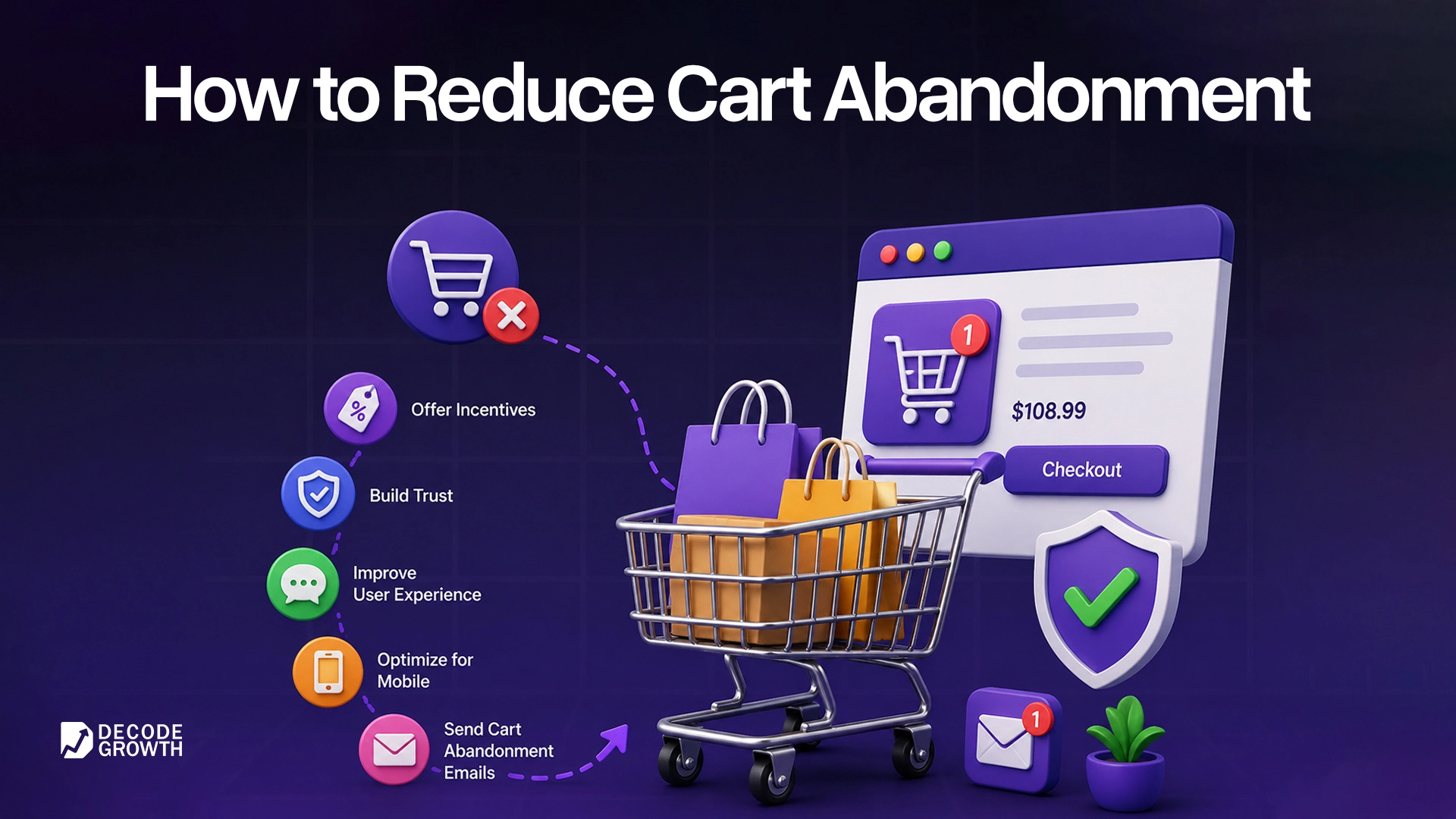
Here’s the short answer: fix your hidden costs, simplify your checkout, and send a follow-up email within the hour. That alone will recover a good chunk of your lost sales. Read on for the full picture, because the details are where the real money is.
You spend on ads. You work on your product pages. You get people excited enough to actually add something to their cart. And then they just… leave.
No purchase. No explanation. Just gone.
That is cart abandonment in e-commerce, and if you’re running an online store, this is probably the most frustrating thing you deal with on a daily basis. Roughly 7 out of every 10 shoppers walk away before completing a purchase. That is not a small problem. That is the majority of your potential customers slipping through the cracks.
The tricky part is that most store owners know about it but do not know which specific thing to fix first. This guide is going to change that.
What’s Actually Driving Your Shopping Cart Abandonment Rate
The Numbers Are Worse Than You Think
The global shopping cart abandonment rate sits at around 70% to 75% heading into 2025. According to Baymard Institute, which has tracked this data across 48 different studies, the average is 70.19%. Other reports from Dynamic Yield put it even higher, closer to 77% at certain points in the year.
What does that translate to in real money? Abandoned carts represent roughly $4.6 trillion worth of products annually. Not all of that is recoverable, but Baymard estimates that up to $260 billion in lost orders can be won back simply through better checkout design. That’s not from running more ads or slashing prices. Just fixing how your checkout works.
If you run a fashion or apparel store, your industry average hovers around 78% to 80%. Luxury and jewelry brands see abandonment rates as high as 82%. Grocery and food stores, on the other hand, deal with rates closer to 38% because people are buying essentials they will definitely need. Knowing where your industry sits gives you a real benchmark to measure against.
Not Every Abandoned Cart Is a Lost Sale
This is something a lot of store owners get wrong. They see their abandonment rate and panic, but a big slice of those exits are completely normal.
Baymard found that 43% of US shoppers abandon carts simply because they were browsing and not ready to buy. People use online shopping carts the way they once used shopping lists or wishlists. They are saving things, comparing prices across tabs, or just killing time. You cannot convert those people in that moment, and honestly, you shouldn’t try too hard to force it.
The people you want to focus on are the ones who intended to buy but hit a wall at some point in the process. Those are the preventable losses, and there are a lot of them.
Who’s Abandoning Most (The Device Problem)
Mobile users abandon their carts at a rate of about 78%, compared to 69% on desktop. That gap exists because most e-commerce checkouts were originally built for desktop and then squeezed into a mobile layout. Tapping through eight form fields on a phone screen while trying to type a billing address is not a great experience. If you haven’t gone through your own checkout on a phone recently, do it right now. You’ll probably find something that frustrates you.
The Real Cart Abandonment Reasons Nobody Talks About Directly
Surprise Costs Are Killing Conversions
This one is so well-documented that it almost feels like old news, but stores keep ignoring it. According to a 2024 Dynamic Yield survey, unexpected extra costs like delivery fees and taxes push 55% of shoppers to abandon their carts. A separate study found that 47% of US consumers left because the additional charges at checkout were too high.
Here’s the thing: shoppers don’t necessarily refuse to pay for shipping. What they refuse is finding out about it on the last page. There is a real psychological reaction when someone sees a $39 item in their cart and then sees $52 at checkout. The trust breaks. They feel misled. And they close the tab.
The fix is simpler than most people make it. Show shipping costs on the product page, or at a minimum on the cart page. If you need an address to calculate it, add a basic estimator. “Ships to your location for $5.99” is enough. Removing the surprise removes the exit.
And if free shipping is even remotely possible within your margins, test it with a minimum order threshold. A banner that says “You’re $12 away from free shipping” actually encourages people to add more to their cart rather than leave.
Mandatory Account Creation Is a Wall, Not a Welcome
26% of shoppers abandon when a site demands they create an account before buying. That number has barely moved in years, which tells you that plenty of stores still haven’t fixed this.
Think about it from the customer’s side. They found your product, they want it, they have their card ready. And then you ask them to stop, come up with a password, verify their email, and create a profile before they can hand you money. That is friction at the worst possible moment.
Guest checkout is not optional anymore. It’s a baseline expectation. Once someone has completed a purchase and they’re happy, that is the right time to invite them to create an account, not before.
A Checkout Process That Takes Too Long
The average checkout today has 5.1 steps and more than 11 form fields. Baymard says an ideal flow should have between 12 and 14 form elements total, and they’ve observed that most stores can cut their current fields by 20% to 60% without losing any important information.
One in five shoppers (22%) abandons because the checkout process feels too long or complicated. Every field you add is a decision point. Every extra step is a moment where someone can second-guess the purchase. Strip your checkout to the essentials. Use address autocomplete. Test autofill on both iPhone and Android. Small improvements here have an outsized impact.
Website Speed and Trust
90% of shoppers will leave if a site loads too slowly. That stat is startling until you remember how you feel waiting for a site on your own phone. A second of delay matters. Two seconds is annoying. Three seconds and you’re gone.
Beyond speed, shoppers who made it all the way to payment are handing over sensitive information. If your checkout page looks dated, lacks recognizable security logos, or doesn’t show trust signals, people hesitate. Security badges from Visa, Mastercard, PayPal, and Apple Pay aren’t decorations. They are conversion tools.
Checkout Optimization: The Changes That Actually Move Revenue
Guest Checkout Needs to Be the Easy Path
Don’t bury it. Don’t make it a small link under a big “Create Account” button. Guest checkout should be front and center, equal in visual weight to signing in. Every extra tap a customer has to take to avoid creating an account is a tap closer to them leaving.
Show Costs Before the Final Step
Full transparency on costs needs to happen at the cart page, not the payment page. If taxes and fees can only be calculated after an address is entered, use a simple estimator. Showing a realistic cost range is better than showing nothing and then surprising the customer at checkout.
Some stores go a step further and build a sticky banner on the cart page that shows the running total, including estimated shipping. That way, nothing changes between the cart and the final screen, and there is no moment of “wait, that’s more than I expected.”
Cut Form Fields and Add Smarter Payment Options
Aim for 8 form fields or fewer. Address autocomplete tools (Google Places API integrates cleanly with most platforms) cut down the typing required significantly. Make sure your checkout works with browser autofill. These feel like small details, but they remove the friction that makes checkout feel like a chore.
On payments: 22% of shoppers abandon when their preferred payment method isn’t available. That means adding PayPal, Apple Pay, Google Pay, and Buy Now Pay Later options isn’t a nice-to-have. Stores that added BNPL options saw average conversion rates improve by 2.1%. For higher-ticket items especially, breaking a $300 purchase into monthly payments makes the decision a lot easier.
Mobile-First Has to Actually Mean Mobile-First
Test your entire checkout on a real phone, not a browser resize. Tap every button. Fill in every field. If any part of it feels clunky, your customers are dealing with that every day. Mobile users represent the majority of your traffic and they abandon at higher rates than desktop users. Fixing the mobile checkout experience is one of the highest-leverage things you can do.
Abandoned Cart Recovery: Getting Shoppers to Come Back
Abandoned Cart Emails Are Underrated
Abandoned cart emails have open rates around 39% and click-through rates of 23%, which is significantly higher than typical promotional emails. The average conversion rate from these emails sits at 10.7%. That means for every 100 people you email after they abandon, about 10 will come back and complete the purchase.
Send the first email within 30 to 60 minutes of abandonment. This is the window when the shopper is most likely still thinking about the product. Keep it simple: show what they left behind, remind them it’s still in their cart, and give them a direct link back to checkout.
Don’t start with a discount. Discounting too early trains shoppers to abandon carts on purpose just to wait for a deal.
Build a 3-Part Email Sequence
A single reminder email gets results. But three-email sequences generate dramatically more revenue. One study found campaigns using three abandonment emails pulled $24.9 million compared to just $3.8 million from single-email campaigns. The difference is compounding multiple touchpoints.
A simple structure that works in practice looks like this. The first email goes out within an hour and is a friendly reminder, nothing more. The second email goes out 24 hours later and addresses a potential concern, your return policy, a reassuring product review, or an answer to a common question about the item. The third email goes out 48 to 72 hours later and, if your margins allow, includes a small incentive like free shipping or a modest discount.
Retargeting and Exit-Intent Popups
Someone who put a product in their cart is far more likely to convert than a cold visitor. Dynamic retargeting ads on Meta and Google that show the exact product they abandoned are one of the most cost-efficient ways to bring them back. The creative doesn’t need to be clever. It just needs to show the product and make it easy to click back.
Exit-intent popups on the cart page work when they’re simple. One message, one offer, one button. “Your cart is about to expire. Complete your order in the next 15 minutes for 10% off” creates urgency without being annoying. Overloaded popups with too many elements do the opposite.
Building the Kind of Trust That Improves Your E-commerce Conversion Rate Long-Term
Trust Signals Need to Be Everywhere, Not Just the Homepage
Most stores put their SSL badge and security logos on the homepage and forget about them. But the moment shoppers need that reassurance the most is when they’re entering their card number. Put trust signals, payment logos, and your SSL seal right next to the checkout button. A short “Your payment is encrypted and secure” line costs nothing and reduces last-minute hesitation.
Your Return Policy Is a Conversion Tool
18% of shoppers abandon because they’re unsatisfied with the return policy, or can’t find it easily enough to feel confident. If your return policy lives only in a footer link, you’re creating doubt at exactly the wrong moment.
Put a plain-language version of your policy directly on the cart or checkout page. “Free 30-day returns, no questions asked” is the kind of line that turns a hesitant shopper into a buyer. It removes the perceived risk of getting it wrong.
Social Proof Near the Checkout Button
Right before someone commits to a purchase, they want reassurance that other people made the same decision and were happy. A simple line near the checkout button like “4,200 customers bought this last month” or “Rated 4.8 stars across 1,300 verified reviews” gives them that final push. It doesn’t cost anything to add, and it works because people trust other people more than they trust product descriptions.
Frequently Asked Questions
Every extra field, step, or loading spinner is a drop-off risk. Strip it down, add guest checkout, take more payment types, and lay costs bare upfront. Baymard’s data says nailing this can boost conversions by over 35% for typical online stores.
It’s not only the extra bucks. It’s that gut punch of feeling tricked. Shoppers add up one total in the cart, then bam, higher at checkout. Trust shatters. Spell out all costs right from the product page to dodge that letdown.
Nope. Doing that trains people to ditch carts just to snag a deal. Start with a gentle nudge and a clear pic of what they forgot. Save the small incentive for email three, after they’ve ignored the first couple.
Hit them with the first one 30 to 60 minutes after they bail. That’s when the buying urge is still hot. An email landing right then pulls way better conversions than something popping up the next day.
Most stores hover between 70% and 80%, though it really depends on the industry. Grocery shops or places selling everyday essentials might only hit 40% to 50%. Luxury brands, jewelry spots, or anything pricey? Easily 80% or more. Honestly, don’t sweat chasing a magic number. Focus on your industry’s benchmark and chip away at it over time.